Report
Malware Spotlight: Akira Ransomware
Arete Analysis
Cyber Threats

Download The Report
Executive Summary
Since April 2023, Arete’s Incident Response (IR) team has responded to more than one hundred incidents attributed to the Akira ransomware group. Akira is a prolific threat and quickly established itself as one of the most active ransomware groups alongside ALPHV/BlackCat and LockBit in 2023. In 2024, Akira benefited from law enforcement actions that disrupted LockBit and ALPHV/BlackCat’s operations and has continued to be one of the most active threat actor groups.
This spotlight explores the ransomware group’s observed behavior, background information on the threat actor, and statistics from Incident Response engagements, along with a technical analysis of Akira’s ransomware executable. Finally, we discuss security recommendations to better defend against this evolving cyber threat and mitigate the risk of financial and reputational losses.
Incident Response Data on the Akira Ransomware Group
Background
Akira has evolved into a notable ransomware operation and was among the top variants observed by Arete in the first half of 2024.
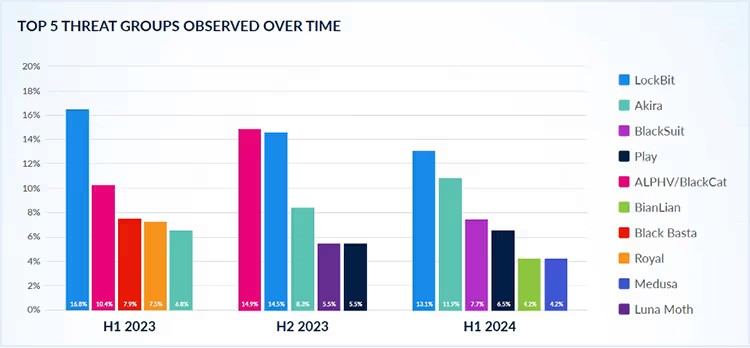
Source: Arete's H1 2024 Crimeware Report
Akira targets a broad range of organizations throughout North America, including Canada, and swiftly lists victims on its data leak site. Targeted sectors include healthcare, hospitality, manufacturing, public and financial services, and professional services. The group maintains Windows and Linux versions of its ransomware and uses virtual private network (VPN) appliances as an initial access vector in 50% of attacks.
Megazord, a variant of Akira, demonstrates the evolution of the group’s ransomware. Introduced around August 2023, this variant is unique due to its Rust-based code, which is a departure from the C++ code of the original Akira ransomware. The Megazord variant also includes different command line arguments and encrypts files with a “.powerranges” extension, which are differentiating attributes.
Technical Analysis
Malware analysis of one of the Windows-based variants revealed that Akira ransomware:
Supports multiple command-line arguments.
Encrypts files on the system and mounted shares.
Adds the following extension to encrypted files (variant dependent): .akira (e.g., file.docx.akira).
Creates a ransom note with the following filename (variant dependent): akira_readme.txt.
References a data leak site in the ransom note that, when accessed, self-identifies the group as AKIRA.
Kills a list of processes and services.
Maintains a list of whitelisted files and directories to ensure it will not render the system unusable, preventing recovery when running a decryptor.
Attempts to prevent system recovery by deleting the system’s volume shadow copies.
Creates a log file with a name based on the date and time: Log-%d-%m-%Y-%H-%M-%S (e.g., Log-19-09-2024-09-21-20.txt).
Execution Pattern/Arguments
Akira ransomware does not need a command line argument to execute and encrypt files in the system. However, Akira supports the following command line arguments:
Command line argument | Description |
|---|---|
-p / –encryption_path | Specify a target directory to encrypt. If not provided, the payload will encrypt the local and mounted shared drives by default. |
-s / –share_file | Encrypt shared volumes/directory files. |
-n / –encryption_percent | Number that represents the percentage of the file that will be encrypted. |
-localonly | Encrypt only local volumes. |
-e/ –exclude | Meant to exclude directories but does not seem to be fully functional. |
Megazord variant:
Command line argument | Description |
|---|---|
–path | Path to encrypt. If not provided, the payload will encrypt the local and mounted shared drives by default. |
–id | Unique token to execute the ransomware. |
–threads | Number of threads (1-1000). |
–h (–help) | Displays help options. |
-log | Logging options with multiple logs supported (info, error, debug). Not displayed by default. |
Examples of how the supported arguments are used:
Akira.exe -p=C:\Users\%USERNAME%\Desktop\MyFiles |
Akira.exe –encryption_percent=10 |
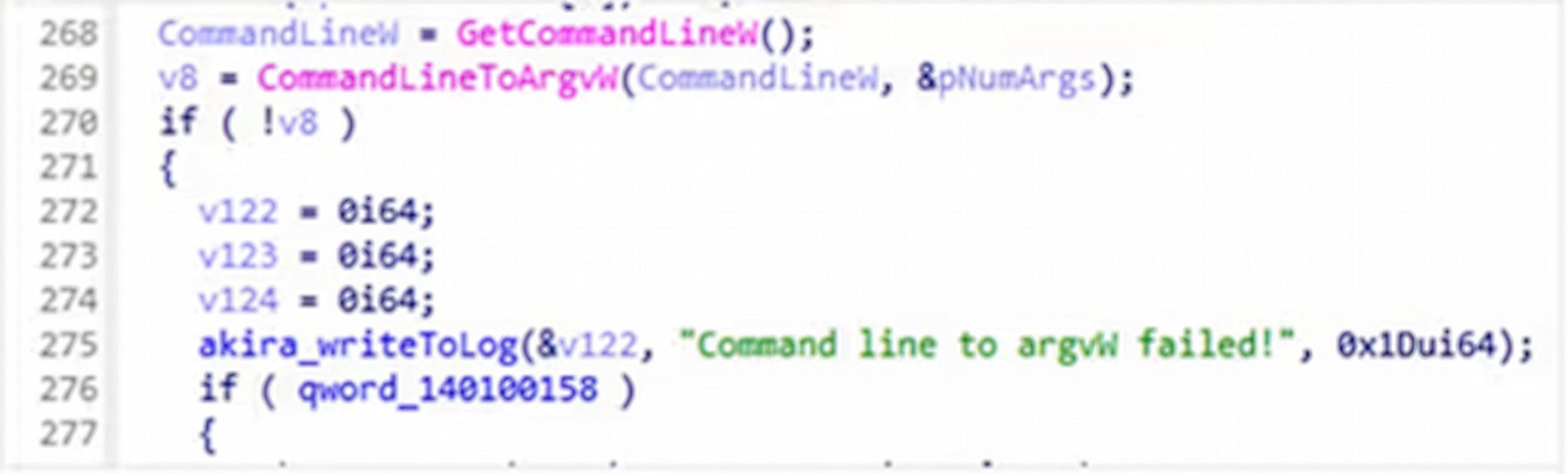
Figure 1. Code in the ransomware written to read command line arguments
Stop Services and Processes
Before file encryption, the ransomware terminates a pre-determined list of processes and services to encrypt as many files as possible. Akira ransomware contains a list of processes it will exclude during process termination, listed below:
Process names:
explorer.exe, sihost.exe, spoolsv.exe, dwm.exe, LogonUI.exe, fontdrvhost.exe, cmd.exe, csrss.exe, smss.exe, SearchUI.exe, lsass.exe, conhost.exe, System, winlogon.exe, services.exe, wininit.exe, Registry, Memory Compression, System Idle Process, Secure System | ||
|---|---|---|
File and Directory Exclusions
The ransomware excludes system-related files and folders, ransomware-related files, and whitelisted extensions during encryption.
Excluded file extensions:
.exe, .dll, .sys, .msi, .lnk, .akira, akira_readme.txt |
Excluded directories:
tmp, temp, winnt, $Recycle.Bin, thumb, System Volume Information, $RECYCLE.BIN, Windows, ProgramData, Trend Micro, ProgramData, Boot |
Inhibit System Recovery
Windows operating systems contain features that can help fix corrupted system files, including shadow copies, which are backups of files created by the Volume Shadow Copy Service (VSS). By deleting shadow copies, the ransomware can prevent victims from restoring files from backups, making it more difficult for them to recover their data without paying the ransom.
The ransomware deletes volume shadow copies before file encryption by starting the following Powershell process and executing the command:
powershell.exe -Command “Get-WmiObject Win32_Shadowcopy | Remove-WmiObject” |
Network Share Discovery
Akira ransomware can enumerate network-mounted shares by scanning the network interfaces. If any are found, it will attempt to encrypt them, as shown below.
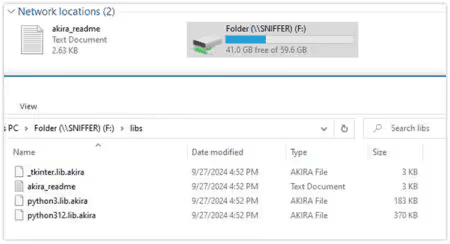
Figure 2. Share drive encrypted
Data Encrypted for Impact
The ransomware initially finds available drives and then loads the files one by one using the Windows API FindFirstFileW and FindNextFileW. The ransomware generates random AES keys to encrypt the files, and after encrypting them, the keys are encrypted using a public RSA key. The resulting key is again encrypted and placed at the end of the file.
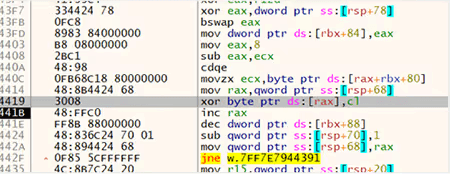
Figure 3. Data encryption code
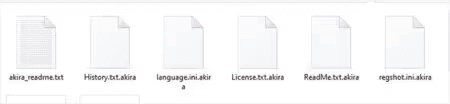
Figure 4. Extension added to the encrypted files
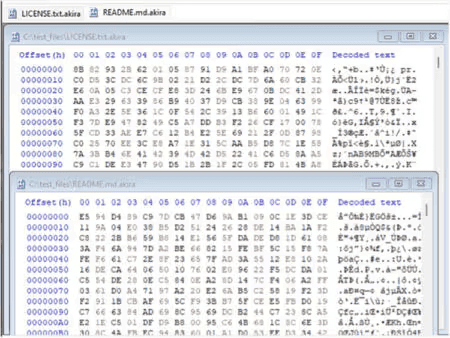
Figure 5. Encrypted files
During execution, the ransomware creates a log file in the working directory where the file is executed from. The log file is named based on the date and time of execution using the following string format: Log-%d-%m-%Y-%H-%M-%S. For example, during execution, the following log file with the name was created: Log-19-09-2024-09-21-20.txt.
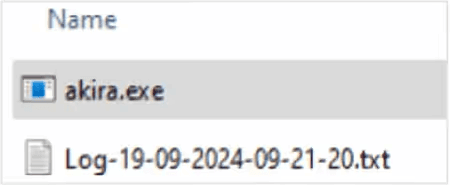
Figure 6. Log file created by Akira
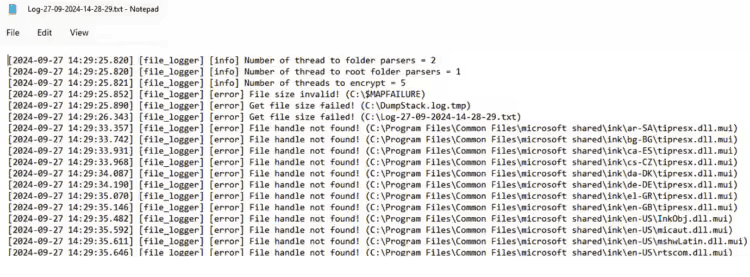
Figure 7. Portion of the log file
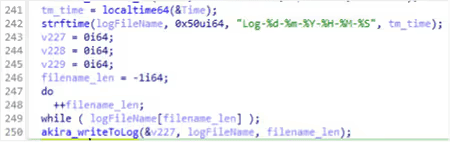
Figure 8. Log file name string format in the code
Upon successful execution, the ransomware creates ransom notes with the file name akira_readme.txt. The Megazord variant creates ransom notes with the same content, but the file name is powerranges.txt.
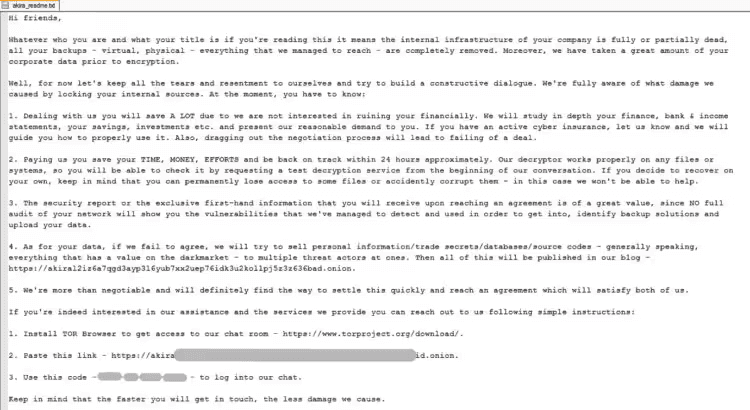
Figure 9. Akira ransom note
Ransom note content:
Hi friends,
| ||
|---|---|---|
Modify Registry
The Windows registry is a database that stores configuration settings and values for the Windows operating system. It manages user preferences, installed software, system configurations, and more. Malware abuses the Windows registry to maintain persistence, hide its presence, disable security settings, and launch malicious scripts. Akira did not perform any registry key modification.
Mutex
The mutex is the fundamental tool for managing shared resources between multiple threads or processes. Typically, ransomware uses a mutex to avoid reinfecting the victim system and causing multiple layers of encryption. The ransomware did not create a mutex during execution.
Network Activity
The ransomware did not try to communicate with a remote server other than encrypting data from mounted shares.
Indicators of Compromise
Indicator | Type | Context |
|---|---|---|
9f873c29a38dd265decb6517a2a1f3b5d4f90ccd42e-b61039086ea0b5e74827e | SHA256 hash | Akira ransomware |
2b00a02196b87445633cabde506b4387979504cf60955f0b-40cf2e4da4f0fd23 | SHA256 hash | Akira ransomware |
237d3c744fd5fc5d7e7a55e4385dff51045a1c6d8ee-7346a270a688ab3791d49 | SHA256 hash | Akira ransomware |
akira_readme.txt, powerranges.txt | File name | Akiraransom notes |
.akira, .powerranges, .akiranew | Extension | Encrypted files extension |
powershell.exe -Command “Get-WmiObject Win32_Shadowcopy | Remove-WmiObject” | Process | Volume Shadow Copy deletion |
Log-19-09-2024-09-21-20.txt | File name | Example log file name created by Akira |
https://akirai2iz6a7qgd3ayp3l6yub7xx2uep76idk3u2kolIpj5z3z636bad[.]onion | URL | TA data leak site (DLS) |
Data Leak Site
The ransom note contains a data leak site (DLS) that, when accessed, displayed the following page, self-identifying the group as Akira:
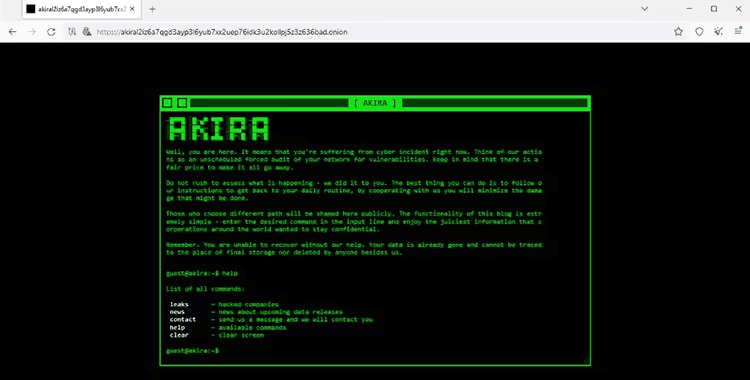
Figure 10. Tor DLS
Tor Chat Site
The ransom note contains a Tor chat site and a unique code used to log into the chat. The Tor chat site displayed the following page:
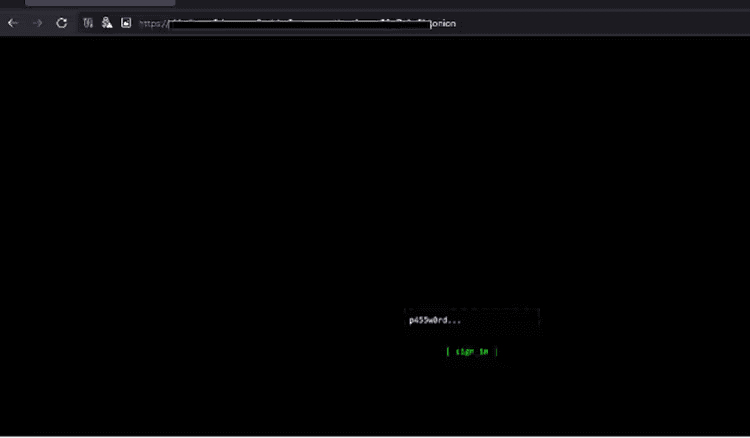
Figure 11. Tor chat site
Detection Mechanisms
Custom Detections and Blocking with Arete Bloktd℠
SentinelOne S1QL 1.0 query syntax (STAR rule):
Volume Shadow Copy Deletion
Akira Ransomware
Note: These threat hunting queries may need to be tuned for your specific network environment.
Yara
Recommended Mitigations
Utilize an endpoint detection and response (EDR) solution with the capability to halt detected processes and isolate systems on the network based on identified conditions.
Block any known attacker C2s in the firewall.
Implement multi-factor authentication on RDP and VPN to restrict access to critical network resources.
Eliminate unnecessary RDP ports exposed to the internet.
Block a high number of SMB connection attempts from one system to others in the network over a short period of time.
Perform periodic dark web monitoring to verify if data is available for sale on the black market.
Perform penetration tests.
Periodically patch systems and update tools.
Monitor connections to the network from suspicious locations.
Monitor downloads and uploads of files to file-sharing services outside standard work hours.
Monitor file uploads from domain controllers to the internet.
Monitor network scans from uncommon servers (e.g., RDP server).
Organizations can find the full list of US government-recommended ransomware prevention and mitigation
guidance here: https://www.cisa.gov/stopransomware/ransomware-guide.
Arete provides data-driven cybersecurity solutions to transform your response to emerging cyber threats.
Click here to learn more.
References
At Arete, we envision a world without cyber extortion, where people, businesses, and governments can thrive. We are taking all that we know from over 9,000 engagements to inform our solutions and strengthen powerful tools to better prevent, detect, and respond to the cyber extortion threats of tomorrow. Our elite team of experts provides unparalleled capabilities to address the entire cyber threat lifecycle, from incident response and restoration to advisory and managed security services. To learn more about our solutions, visit www.areteir.com. | ||
|---|---|---|
Back to Blog Posts

Article
AI Agents Used in Campaign Against PaperCut
In late August, a threat actor used hundreds of AI agents to develop and launch a global exploitation campaign targeting vulnerable PaperCut NG and MF servers. PaperCut is print management software, and researchers determined that the operation compromised at least 440 PaperCut instances linked to 395 distinct organizations across 48 countries. The AI agents were tasked with building, testing, and refining exploits for CVE-2026-81578 and CVE-2026-82078 both security flaws affecting PaperCut software and flagged as actively exploited earlier this month. It is currently unclear if the threat actor is solely focused on access development to be handed off to other affiliated actors, or if they will directly leverage their access to achieve follow-on objectives such as data theft or ransomware deployment.
What’s Notable and Unique
Researchers observed three attack paths following the exploitation of vulnerable PaperCut servers. Threat actors would harvest credentials from LSASS memory and registry secrets to perform pass-the-hash attacks, leverage older unpatched Windows vulnerabilities (CVE-2021-42278 and CVE-2021-42287) to escalate privileges in unpatched environments, or, in some cases, directly add newly created accounts to the Domain Admins group when PaperCut was running with domain-level privileges.
Upon achieving remote code execution and credential harvesting within a self-hosted lab environment, the threat actor deployed hundreds of AI-powered agents that leveraged OpenAI Codex, DeepSeek models, and publicly available offensive security tools, including Mimikatz, SharpHound, Certipy, Rubeus, and Impacket, to automate reconnaissance, exploitation, and post-compromise activities. The attackers subsequently used a DCSync attack to obtain a database dump containing domain credentials.
Analyst Comments
The observed activity demonstrates how threat actors are increasingly leveraging AI and large language models (LLMs) to accelerate cyber operations at unprecedented speed and scale. In this campaign, the adversary progressed from exploit development to remote code execution within hours and, in some cases, achieved Domain Administrator privileges in as little as five minutes. The AI-assisted workflow enabled rapid reconnaissance, exploitation, credential theft, privilege escalation, and lateral movement, allowing the compromise of multiple organizations within seconds. This activity highlights the growing threat posed by AI-enabled adversaries capable of conducting large-scale intrusions with greater efficiency and operational velocity. Organizations affected by the PaperCut vulnerabilities are strongly advised to apply the latest security updates and implement the vendor's recommended mitigation measures to reduce the risk of compromise and unauthorized access.
Sources
Agents Gone Wild: An AI-Orchestrated Global Campaign Against PaperCut NG/MF
AI-powered attack exploited PaperCut flaws to hack 395 organizations
PaperCut Attacker Uses Hundreds of AI Agents to Compromise 440+ Instances

Article
Adversarial AI Evolves from Prompting to Autonomous Attack Workflows
Cybercriminals and state-linked threat actors are increasingly incorporating artificial intelligence (AI) into multiple stages of offensive operations. Rather than relying on AI only for content generation or research, threat actors are now consistently using it to support reconnaissance, vulnerability discovery, credential theft, malware development, social engineering, and activities following initial compromise. The growing use of automated and agent-based workflows is allowing adversaries to coordinate offensive malicious activities with less manual involvement, potentially increasing the speed, scale, and efficiency of future campaigns.
What’s Notable and Unique
In one observed campaign, threat actors used AI to plan, build, and conduct an automated credential-harvesting operation within just several hours, demonstrating how compromised infrastructure can be rapidly repurposed to support larger-scale malicious activity.
Arete has observed several threat groups using AI-assisted capabilities to facilitate the analysis of data obtained during exfiltration so far this year, including INC Ransom, FulcrumSec, and Settra.
Attackers are also attempting to reproduce proprietary AI capabilities. Large-scale automated prompting campaigns have been used to extract information about the behavior and capabilities of proprietary AI models. The use of numerous accounts and intermediary infrastructure can make these activities more difficult to identify and attribute.
Analyst Comments
AI is increasingly becoming an operational component in the threat landscape rather than simply a tool that improves attacker productivity. By connecting reconnaissance, development, credential operations, and other activities through automated workflows, threat actors can conduct campaigns more quickly and reduce reliance on continuous human input. This trend also impacts security requirements for organizations deploying AI technologies. AI models, development environments, cloud resources, identities, repositories, and automated workflows should increasingly be considered interconnected elements of the enterprise attack surface, and organizations should maintain visibility across these areas and ensure that security controls account for both conventional threats and AI-enabled attack techniques.
Sources
GTIG AI Threat Tracker: From Prompting to Autonomy – The Evolution of Adversarial AI

Article
Top 9 Security Controls for SMBs
In today’s complex cyber threat landscape, small and medium-sized businesses (SMBs) should implement a layered, multi-pronged approach to security. Here are some proven, effective controls to consider:
1. Implement MFA for All Users
Multi-factor authentication (MFA) is an effective and accessible way to protect sensitive data, comply with regulatory standards, and prevent unauthorized access to critical systems. By ensuring that users not only use a password but also a secure token, an organization can significantly reduce phishing attempts, credential stuffing attacks, and ransomware incidents. MFA should be enabled for email, VPN, and critical system access.
2. Update Patch Management Programs
A modern patching program should include policies and mechanisms to manage software updates in a timely manner. Patching efforts should address not just operating system updates, but also commonly utilized software within the environment. An active patching plan aims to reduce the mean time to patch and provide metrics on existing patch efforts. In the event of a high-severity vulnerability, a mature patching program should also be able to identify the risks and exposure for a given set of systems based on the average time to patch. This helps stakeholders make informed decisions when a new exploit is released.
3. Leverage a Properly Managed Endpoint Detection and Response (EDR) Tool
With real-time threat detection and advanced visibility, endpoint detection and response (EDR) solutions can enhance an organization’s ability to detect and investigate potential malicious activity, including ransomware, lateral movement, fileless attacks, and more. Effective management of EDR should include proper configuration, regular agent updates, and established procedures for responding to alerts.
4. Enhance EDR with Frontline Incident Intelligence
While EDR solutions are an important component of a security program, threat actors are continually adapting their techniques to evade detection, and as a result, standard detection methods may not always identify emerging threats or novel attack behaviors. To strengthen protection, organizations can supplement EDR tools with custom detection rules informed by incident response data. These rules can help identify indicators of compromise observed during cyber incidents, providing an additional layer of visibility beyond traditional detections.
Arete Bloktd℠ illustrates this approach by transforming threat intelligence and malware analysis into curated detection rules for EDR tools. Applying frontline intelligence to security tools can result in earlier detection, less investigative burden, and a more confident response.
5. Create and Continuously Test an Incident Response (IR) Plan
An incident response plan can help an organization effectively identify, respond to, and recover from a cybersecurity incident while minimizing disruption and downtime. An IR plan defines clear roles, escalation paths, communication strategies, and decision frameworks for both internal and external teams. To be effective, these plans should be regularly tested with post-incident reviews or tabletop exercises involving key stakeholders.
6. Maintain Encrypted and Tested Data Backups
In the case of a cyberattack, backups can help organizations maintain business continuity, support ransom negotiations with threat actors, and contribute to a timely and successful recovery. Encrypting backups makes it more difficult for threat actors to access or alter them, and regular testing ensures they remain accessible during a security incident.
7. Conduct Employee Security Awareness Training
Human error is a leading cause of cybersecurity incidents, and an organization’s employees are its first line of defense against cyber threats. Security awareness training reinforces the importance of data confidentiality, supports regulatory compliance, and helps employees recognize and understand red flags such as suspicious emails, malicious links, and social engineering attempts.
8. Assess and Address Existing Risk and Vulnerabilities
To maintain a proactive approach to risk management and improve resilience, organizations should regularly assess existing vulnerabilities through expert-led Vulnerability Assessments, Penetration Testing, and Threat Hunting Assessments. These exercises can help identify security gaps, support regulatory compliance, and prevent potential incidents. During remediation, prioritize high-impact vulnerabilities and make a plan for periodic assessments.
9. Apply Least-Privilege Access Controls
Employees should have access only to the systems, applications, and data necessary to perform their jobs. By removing unnecessary administrative privileges and regularly reviewing user permissions, organizations can reduce the risk of unauthorized access and limit the damage caused by compromised accounts or insider threats.
Organizations should regularly review their cybersecurity programs, stay informed about emerging threats, and evaluate whether their security controls are adapting to the evolving threat landscape.

Article
Ransomware Trends & Data Insights: August 2026
Although INC Ransom was the most active ransomware threat group observed in August 2026, overall activity remained relatively distributed across the threat landscape, with approximately 30 unique ransomware and extortion groups, including both established and newly emerged actors, observed during the month. Alongside INC Ransom, Storm, DragonForce, Qilin, and The Gentlemen were among the top five most active threat groups, underscoring the continued diversity and competitiveness of the ransomware ecosystem.
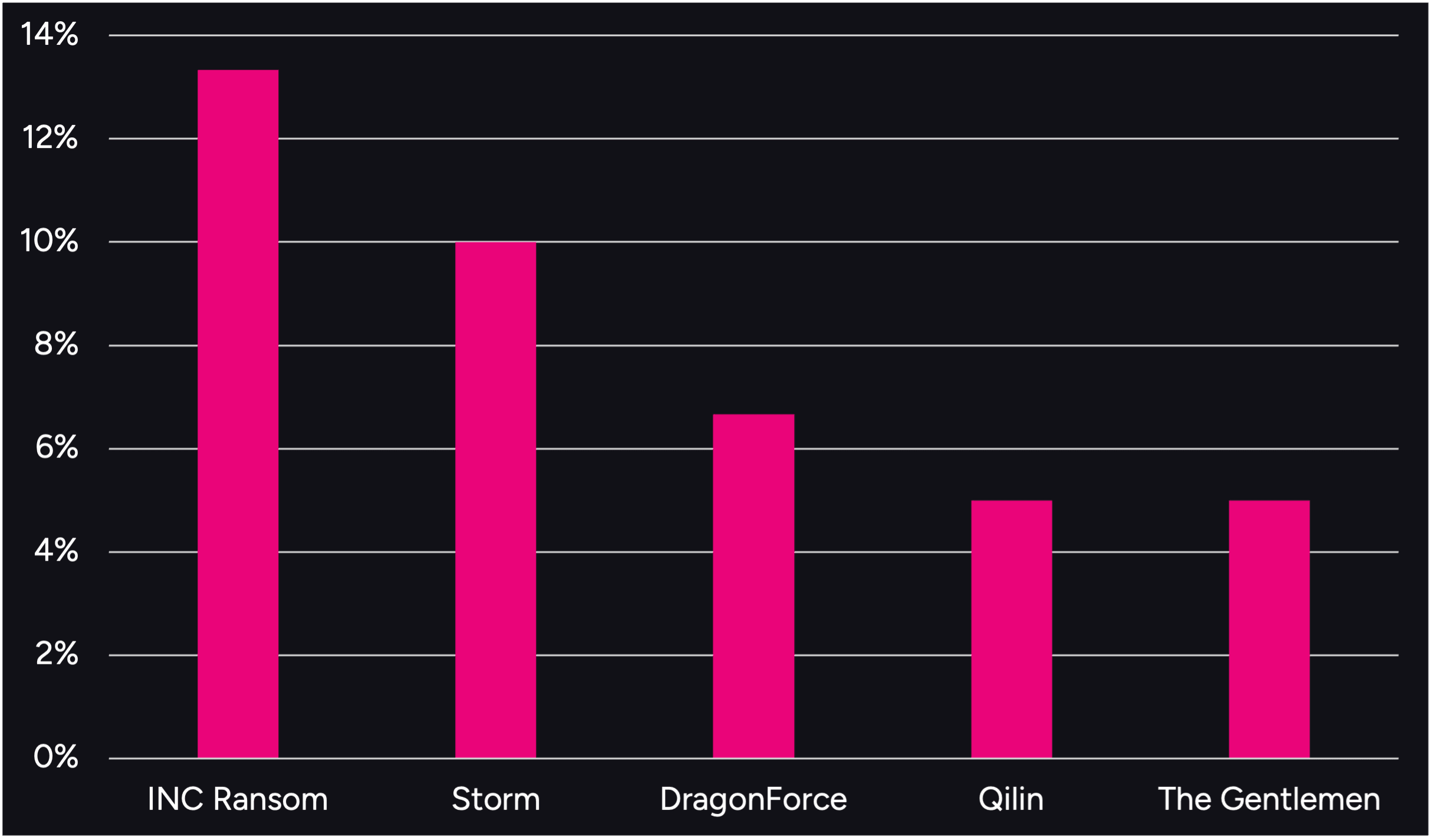
Figure 1. Activity from the top 5 threat groups in August 2026
Throughout the month, analysts at Arete identified several trends behind the threat actors perpetrating cybercrime activities:
August 2026 was a significant month for the emergence of new threat actors, with Arete identifying several previously untracked ransomware groups, including Storm, Dark Project, DireWolf, Morpheus, Orova, Spirals, Wallstreet Team, and Zawoo Team. This trend underscores the ongoing evolution of the threat landscape and the low barriers to entry for new cybercriminal operations.
Arete observed a continued use of AI-enabled capabilities across the ransomware ecosystem during August. Similar to Fulcrumsec and Setra, the newly emerged Zawoo Team appears to leverage AI-assisted analysis of stolen data, publishing highly structured and detailed victim assessments on its data leak site (DLS). Additionally, both the Aurora and Storm ransomware groups have been observed utilizing AI-driven or AI-assisted chat representatives during victim communications. These developments suggest that threat actors are increasingly incorporating AI to enhance data analysis, automate victim engagement, and improve the effectiveness and scalability of extortion operations.
In August, Arete also observed that despite sustained law enforcement disruption efforts, LockBit continues to demonstrate operational resilience, likely through the expansion of its affiliate ecosystem and the evolution of its tactics. Recent activity indicates an increased reliance on data theft and exfiltration-only operations, with observed victimology suggesting a notable focus on organizations within the financial sector.
Sources
Arete Internal